A baby packing list can get very long before you’ve packed a single outfit. There’s the milk. The bottles. Something to wash the bottles with. The pajamas, spare pajamas, and whatever you’ll put the wet pajamas in.
We want to help you work out how much of that actually needs to come with you. Below is a week’s starting wardrobe, the feeding and changing supplies pictured, and the things worth checking with your accommodation before they take over your suitcase.
Our family makes three big trips most years: home across the country for the holidays, Asia in the spring to visit our factories, and Europe in the summer to work and live abroad. We keep refining how we pack because every extra bag becomes something else to manage between the airport, the train and wherever we’re staying.
This guide is for babies around 3–12 months old, a seven-day vacation, and weather outside of winter. The photos show the inventory we’re working from. They also show its limits: the diapers are a starting supply, the feeding setup uses formula, and the crib obviously isn’t in the suitcase.
Table of Contents
- Your baby packing list at a glance
- What do you actually need to pack for a week with a baby?
- Our complete baby packing list
- How do you keep all of this organized in carry-on luggage?
- How much should you pack for a shorter or longer trip?
- Before you pack the bigger baby gear
- What can you skip when packing for a baby?
- A few travel tips that make the packing list work
- FAQs
Your baby packing list at a glance
Start here, then cross off what doesn’t apply. We have detailed photos and packing notes below, but here's an overview:
- Clothes: 9 everyday one-piece outfits, 3 pajama sets, socks as needed, a light layer and sun hat for the forecast. Soft shoes are optional for a baby who isn’t walking.
- Diaper changes: approximately 12 diapers as a starter supply, 2 packs of wipes, diaper cream, a changing pad or kit, and disposal bags. Add diapers for the time until you can restock, plus a buffer.
- Feeding—choose your setup: bottles and sufficient formula if used; nursing supplies you normally use; or a pump, parts, charger, milk storage and cooling supplies. For solids, add familiar food, a bib, spoon and cup. If using bottles or pump parts, arrange washing, drying and any required sanitizing supplies.
- Sleep: an appropriate crib or bassinet, correctly fitting sheets if not provided (3 in our example), your usual sleep sack if used, sound machine and charger. Add a monitor if the room layout makes it useful.
- Comfort: at least 2 pacifiers if used, a teether if needed, and a small selection of familiar toys or books. Keep soft toys out of an infant’s sleep space.
- Bath and care: 7 muslins, a towel if needed, baby wash, usual lotion, brush or comb, nail clipper, thermometer, prescribed medicines and any clinician-recommended supplies. Add toothbrush and toothpaste if applicable, and age-appropriate sun protection.
- Laundry: a wet/dry bag or other bag for soiled clothes, plus familiar detergent packed safely or arranged at your destination.
- Transport and paperwork: stroller and/or carrier, suitable car seat for planned drives, and the baby’s required travel documents. Keep booking details, relevant health information and insurance information accessible.
You don’t need to carry every item in the suitcase. Some belong in the diaper bag, and larger gear can be arranged at your destination once you’ve confirmed what’s available.
What do you actually need to pack for a week with a baby?
Think through a normal day at home, from the first feed to bedtime. That gives you a much better starting point than a shopping list of travel accessories. What gets used repeatedly? What gets washed? Which things could your hotel or rental provide?
For this baby vacation packing list, the clothes and reusable supplies cover your stay. The things you need while getting there go in a separate diaper bag. We have a packing list for flying with a baby for that part—the feeds, changes and little distractions you’ll want within reach.
There’s some sharing between the bags. If you put two of the outfits below into your diaper bag, you still have nine outfits altogether. You’ve just saved yourself from opening a suitcase during a change.
Our complete baby packing list
Clothes
- 9 everyday one-piece outfits
- 3 two-piece pajama sets
- 1 pair of soft baby shoes, visible in the packed-bag photo; optional for a baby who isn’t walking
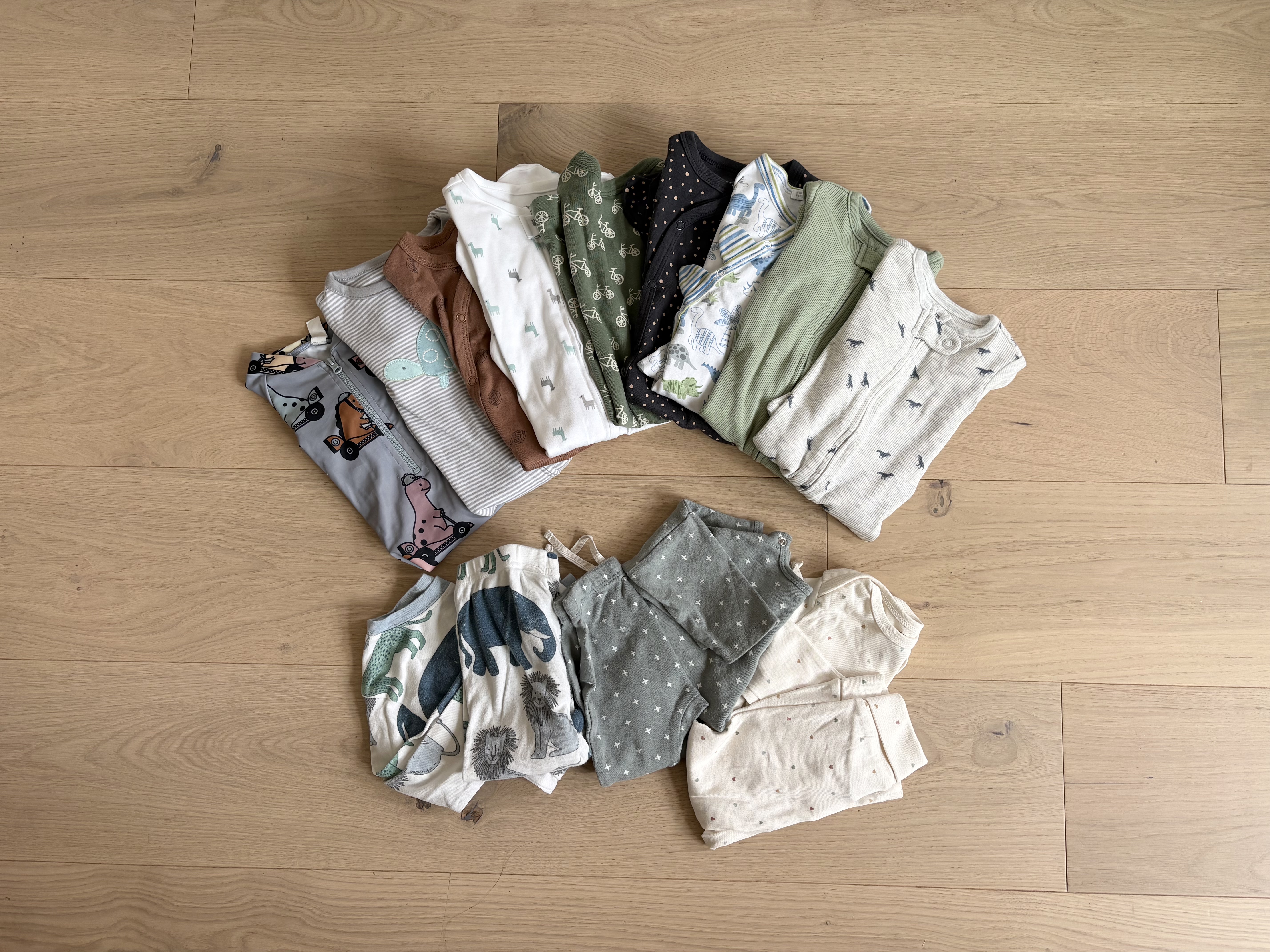 Nine one-piece outfits and three two-piece sets, laid out before packing.
Whether that lasts a full week depends on your baby. If one messy feed usually means a change, you already know to allow for that. If you’re regularly changing clothes three times a day, plan a wash sooner or bring more. Nine outfits aren’t a promise that laundry can wait until Sunday.
We’ve kept the clothes upright together on the right side of the bag, with pajamas grouped so they’re easy to find on arrival. Choose the outfits for the forecast, and add a light layer or sun hat where needed; neither is shown in this clothing photo.
Diapers and changing essentials
- Approximately 12 diapers
- 2 packs of wipes
- 1 tube of diaper cream
- 1 Sidekick changing kit
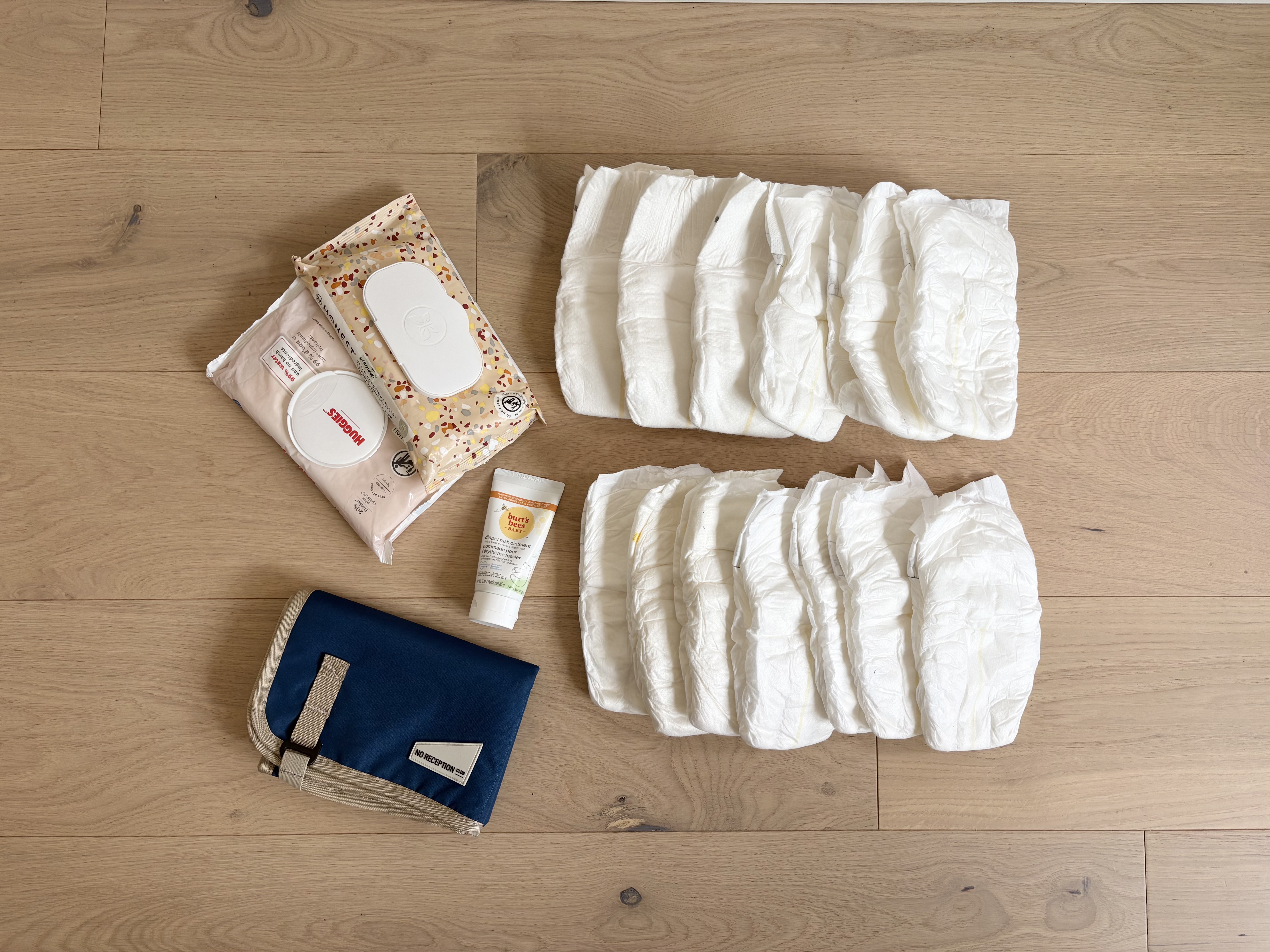 The diaper supplies pictured are a starting supply, rather than a full week’s allocation.
Twelve diapers won’t cover a week. This is one place where packing compactly depends on what happens after you arrive.
If you’re buying more at the destination, work out where and when. Arriving late, picking up a rental car and getting everyone to bed might mean that shopping has to wait until the following day. Pack for that gap, too.
Use your baby’s daily diaper count × the days until you can restock, then add a buffer. Six a day for two days means 12 before the buffer. If you won’t have a reliable place to buy them, calculate for the entire vacation.
The spare diapers stand together along the front-left of the packed bag. The changing supplies needed during the journey belong in your diaper bag, where a change doesn’t require unpacking the luggage.
Feeding
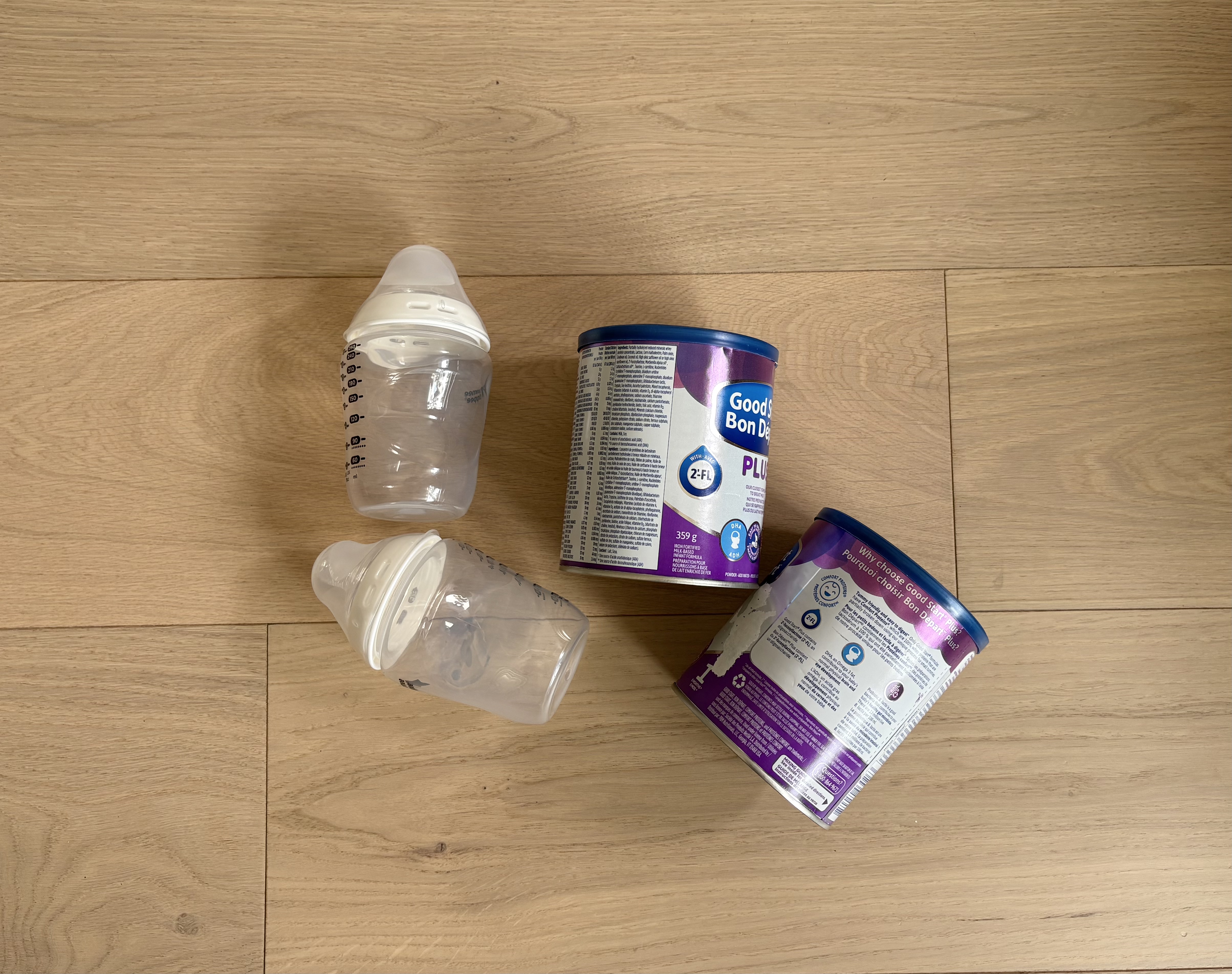
Use your baby’s usual intake and the preparation instructions to work out how much formula to bring. We always plan to buy more at the destination but we bring extra just in case we're not able to go to the store when we arrive.
Then think about washing. Two bottles may be workable with a place to clean them between feeds; they’re much less convenient if you’re out all day with no suitable setup. Add the bottles and washing supplies your routine needs, including a bottle brush if one won’t be available.
If you’re nursing, you may be able to leave much of this category behind. If you pump, account for the pump, parts, charger, milk storage and cooling supplies you use. For a baby already eating solids, add the foods and utensils you’ll need—a bib, spoon and cup, for example.
Choose the feeding supplies that match your day:
- Nursing: bring the nursing bras, pads and other supplies you actually use. You don’t need to add bottles or a pump simply because you’re traveling.
- Pumping or bottle-feeding: include the pump and parts if used, charger, bottles, milk or formula, storage containers and suitable cooling equipment where needed. Give the cleaning supplies a place in the bag, too.
- Solids: bring familiar foods for the journey and early meals, a washable bib, spoon and cup. Arrange an appropriate high chair if you’ll need one.
Sleep Essentials
- 1 fitted crib sheet
- 1 sleep sack
- 1 [blanket?]
- 1 baby monitor: camera and parent display
- 1 portable sound machine
- Required charging cables and adapters; one cable and adapter are pictured
- 1 stuffed rabbit for awake-time cuddles
- 1 boxed collection of little books
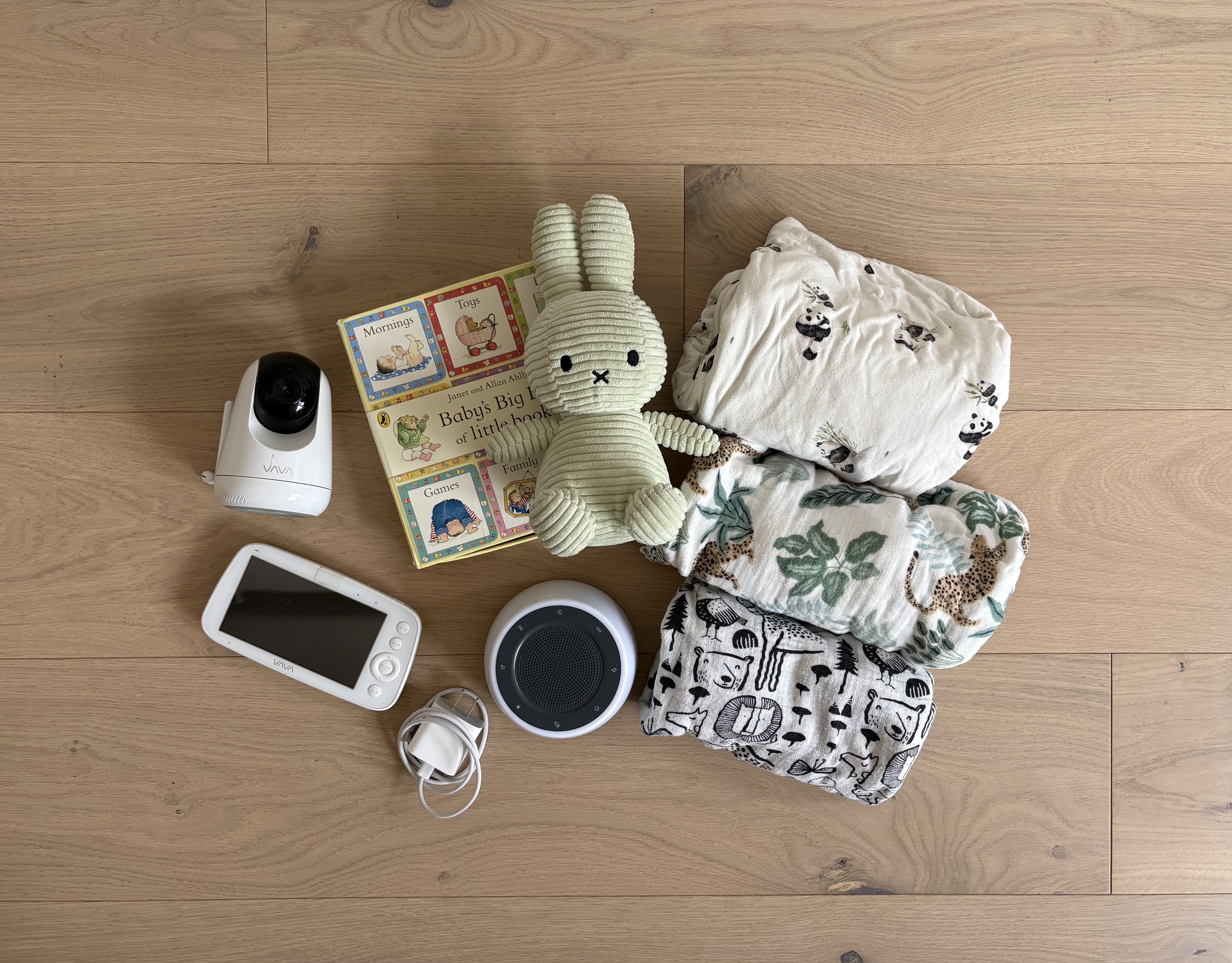 A small bedtime kit: familiar supplies grouped together for arrival.
We like to keep all our sleep items together in one compartment. When you've arrived at your destination, it becomes super easy to get the room set up so that your little one can go to bed... especially if you've had a long travel day!
Other Baby Essentials
- 7 muslin cloths
- 1 hooded towel
- At least 2 pacifiers, if used, with clips/accessories pictured
- 1 brush, 1 comb and 1 nail clipper
- 1 small toiletries pouch, including a small spray bottle
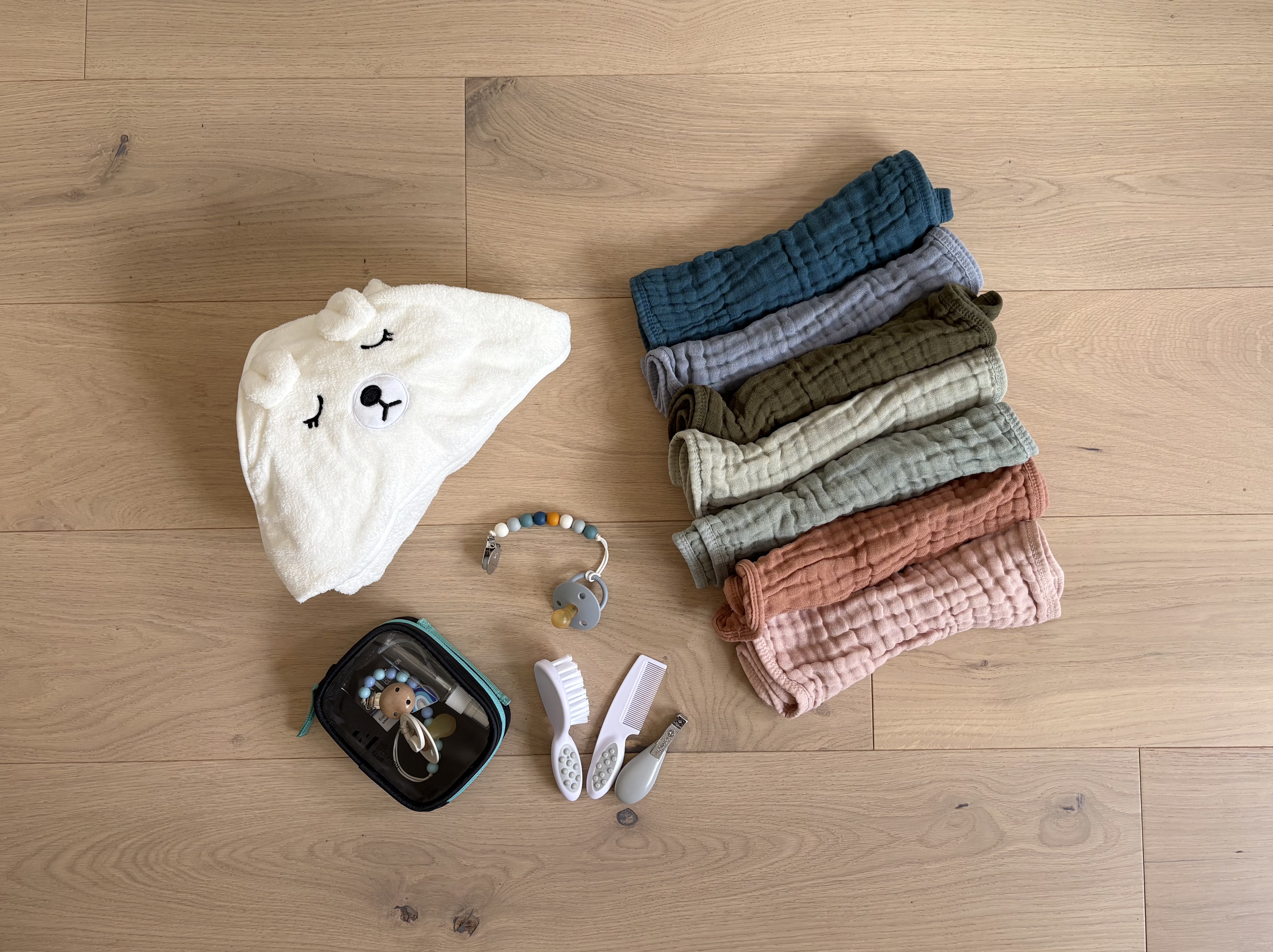 Seven muslins and a compact care kit, with small accessories contained in one pouch.
This is also an easy place to trim what you bring. If a suitable towel is waiting for you, leave yours at home. If you barely use the comb, it doesn’t suddenly become essential on vacation. On the other hand, if seven muslins would only last two days in your house, bring more or wash sooner.
Keep the care kit small, but specific to your baby. Bring the products you use at home, and keep medicines in their original packaging with any dosing instructions and measuring device. Pack age-appropriate sun protection for time outdoors.
How do you keep all of this organized in carry-on luggage?
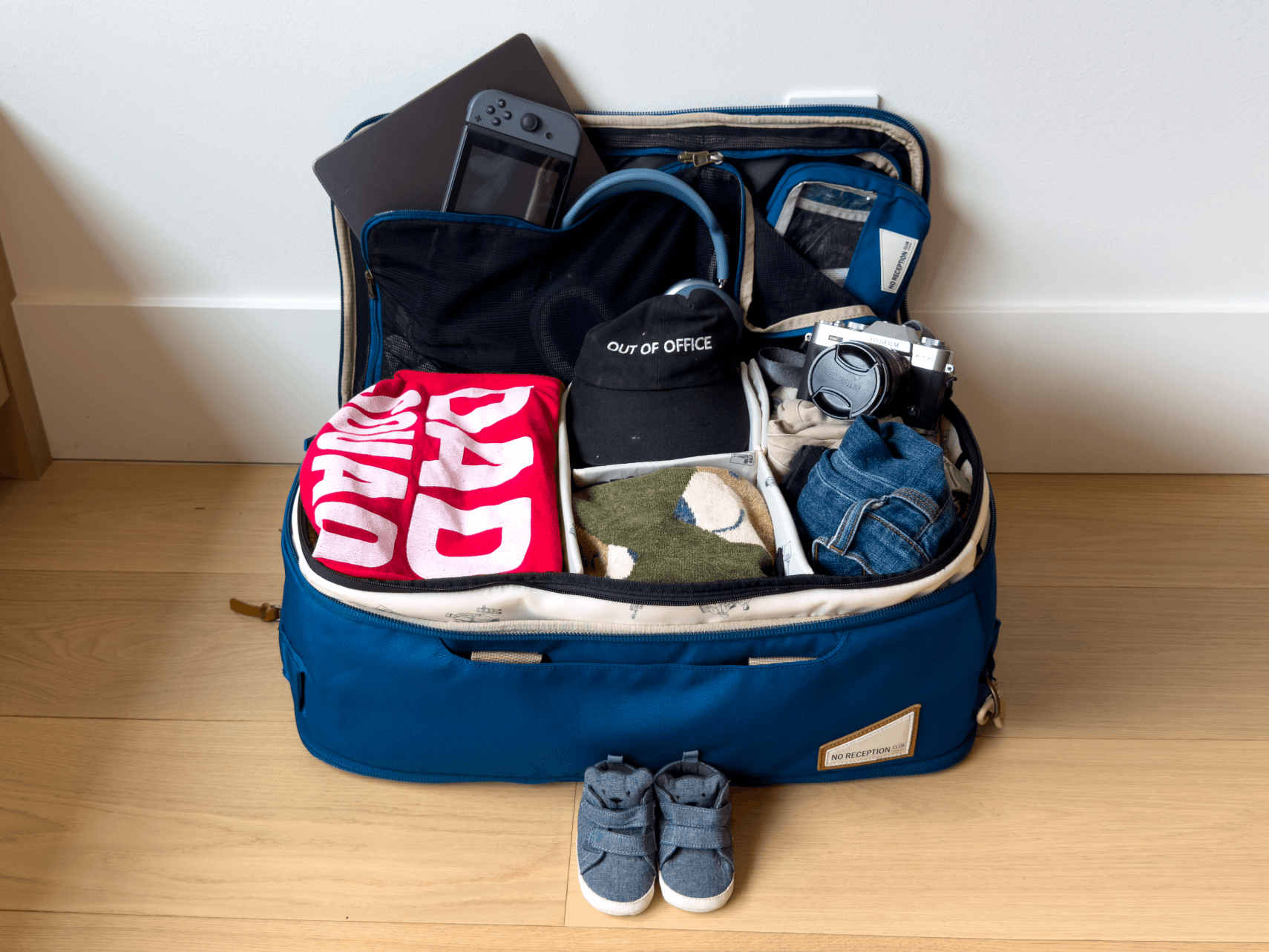
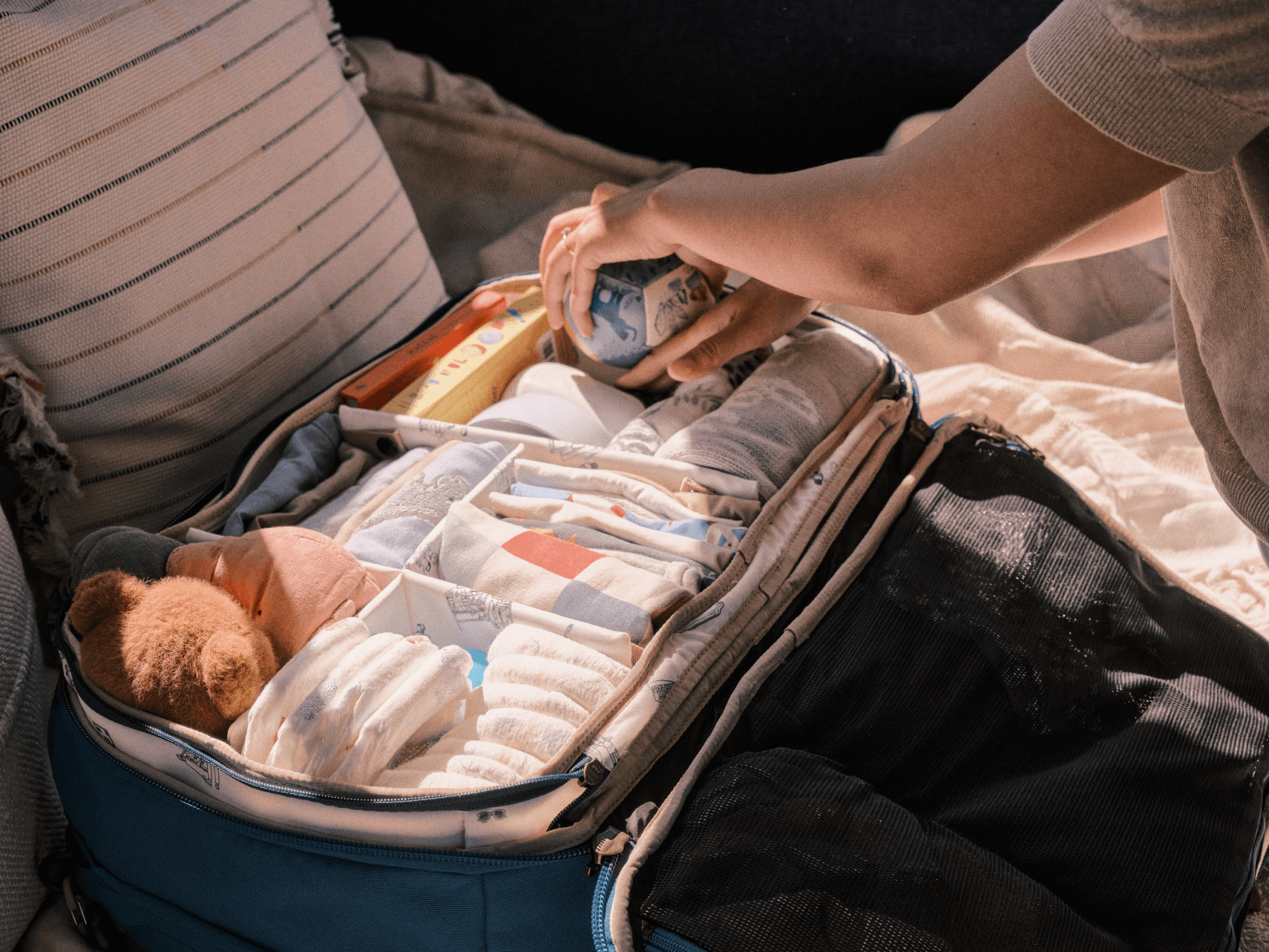
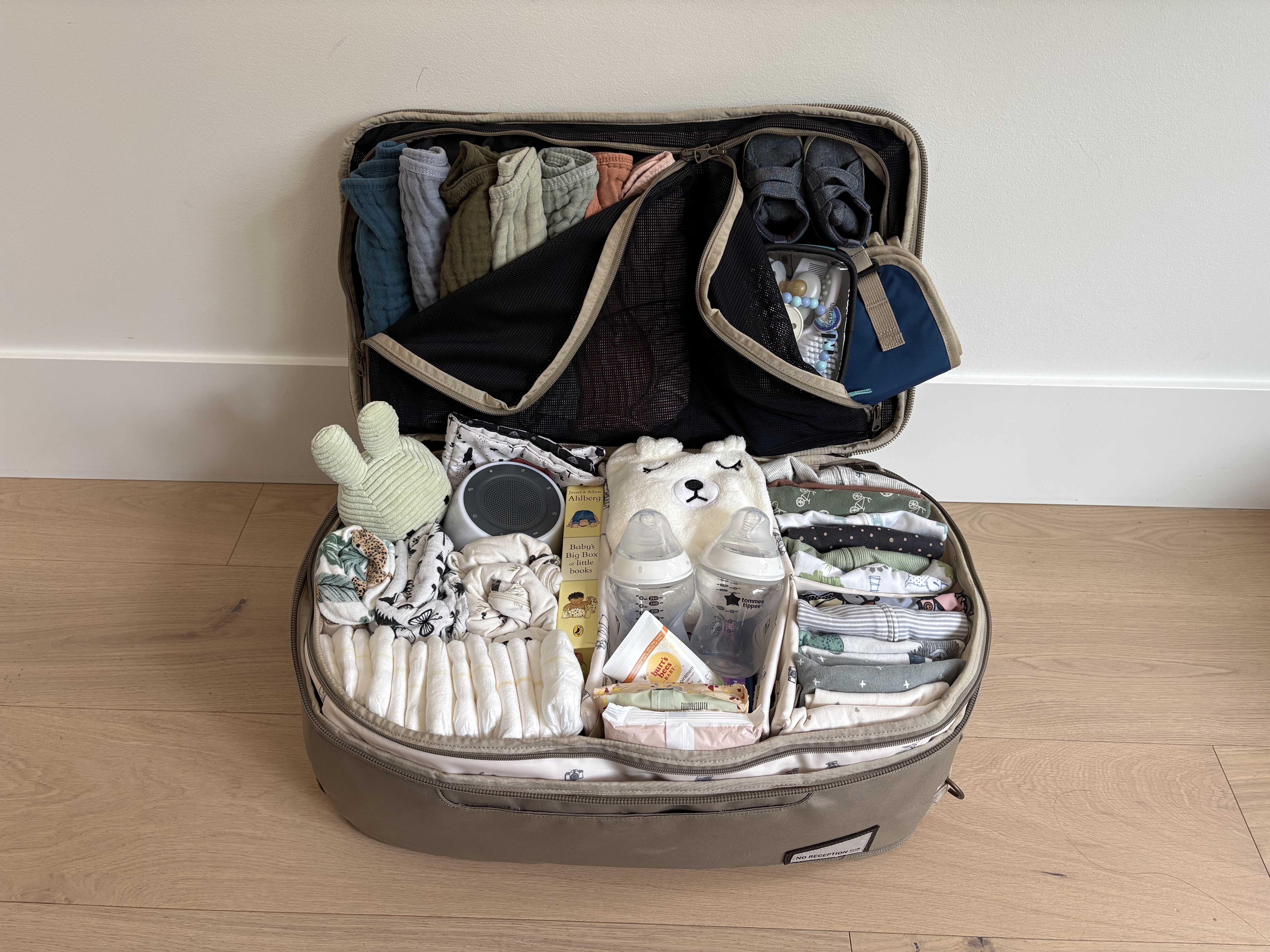 The packed layout keeps each category visible. Formula tins and larger baby gear are not demonstrated in this packed photo.
Clothes on the right. Diapers and folded textiles on the left. Bottles in the middle. Muslins and the small care pouch in the lid.
That’s the useful part of this layout: you can see the groups without emptying the bag. We call it the Closet Method. Clothing is folded upright, and each category has a place to return to after you take something out.
It’s how we approach packing with our signature Cubby packing organizer in the Rollaway or Hideaway, which Parents named as the Best Bag for Family Travel in its 2026 Best for Baby Awards.
The Hideaway Carry-On Duffel
$295
** MEETS AIRLINE CARRY-ON SIZE REQUIREMENTS ** Made with travel-tough, durable materials and backed by our lifetime warranty, The Hideaway is an award-winning 42L carry-on duffel bag with compartments, including a customizable packing organizer (The Cubby). Unlike duffels with fixed… read more

For a longer trip, keep roughly the same wardrobe and wash it each week, or sooner when needed. Diapers and formula need replenishing separately. And weigh the finished bag: fitting inside a carry-on doesn’t necessarily mean meeting your airline’s weight allowance.
If you’re working out whose things go where, our family vacation packing list shows how we divide luggage across the family. The Rollaway and Hideaway can carry either an adult’s or a child’s things; you don’t have to assign them by age.
How much should you pack for a shorter or longer trip?
| Item | 2–3 days | 4–5 days | 7 days | More than 7 days, with laundry |
|---|---|---|---|---|
| Everyday outfits | 4–5 | 6–7 | 9 | Start with 9; wash weekly or sooner |
| Pajama sets | 2 | 2–3 | 3 | Start with 3; wash as needed |
| Muslin cloths | 3–4 | 5–6 | 7 | Start with 7; wash as needed |
| Diapers | Daily use × days until restocking, plus extras | Same calculation | Same calculation | Replenish throughout the trip |
| Formula, if used | Usual consumption for the time until confirmed restocking, plus a buffer | Same calculation | Same calculation | Plan the full supply or reliable restocking |
These quantities assume your baby usually gets through about one daytime outfit per day, with spares for messes. If your baby regularly needs several changes, bring more or wash sooner. Move travel-day outfits into your diaper bag from these totals.
Before you pack the bigger baby gear
“We have baby equipment” is a good start from a host, but it’s worth a follow-up. Ask what’s actually available, especially for sleeping and driving.
- Crib or bassinet: confirm the model, condition, mattress and fitted-sheet arrangements. Arrange a suitable sleep space if you can’t confirm one.
- Car seat: plan for the airport transfer as well as the rest of the trip. If you’re arranging one locally, confirm the actual seat and whether it’s suitable for your child.
- Stroller or carrier: choose around the walking, stairs and transport you’ll encounter. The easiest airport option isn’t automatically the most useful for the whole week.
- High chair and bath supplies: ask what’s provided before deciding what to bring or arrange.
Those answers affect your luggage far more than leaving out one extra outfit. Get them settled before trying to squeeze everything into the bag.
What can you skip when packing for a baby?
Start with the things you rarely use at home, then look for duplicates. A smaller bag is much easier to achieve when you leave out a bulky item than when you keep removing one tiny sock.
- A week’s supply of every disposable: bring enough to reach a confirmed restocking point, with a buffer. Keep the full supply if shopping or delivery isn’t reliable.
- The whole toy basket: choose a few familiar favorites and compact books. One teether can come on outings and stay useful back at your accommodation.
- A separate bottle warmer: leave it if your baby already accepts milk without warming and you won’t need it for your routine.
- A monitor for every stay: if you’ll be together in one room and won’t use it, leave it home. Bring it when the layout calls for it.
- Provided towels, sheets and bulky gear: cross them off only after confirming what’s available and suitable. You don’t need to pack a backup version of everything a reliable host is providing.
A few travel tips that make the packing list work
- Ask about laundry before choosing the clothes. Check for a washer, detergent and somewhere to dry things. No dryer may mean washing earlier, rather than waiting until the last clean outfit.
- Make your first night easy. Know where the next feed, diaper change and pajamas are. Keep them accessible until you reach your accommodation—even if you’re checking the main luggage.
- Arrange supplies before arrival. Order diapers and wipes to the accommodation if it accepts deliveries, or identify a store on your route. Check the exact formula’s availability before relying on a local purchase.
- Get specific about borrowed or rented gear. Ask for the actual crib, car seat or high-chair model, confirm suitability, and reserve it ahead. A listing that says “baby equipment” leaves a lot unanswered.
FAQs
How many baby outfits should I pack for a week?
Start with the nine everyday outfits and three pajama sets in this list, then compare that with your baby’s usual changes. If you regularly use two or three outfits a day, arrange an earlier wash or pack more. Put the journey’s spare outfits in your diaper bag; they count toward the total.
How many diapers should I pack for vacation?
Multiply your baby’s usual daily use by the days until you can reliably restock, then add a buffer. At six diapers a day, a full seven days means 42 before extras. The approximately 12 in our example are a starter supply, so you’ll need to bring more or arrange a purchase or delivery.
What changes when packing for a 3-month-old versus a 9-month-old?
Pack around your baby’s current routine. For a younger baby, allow for frequent milk feeds, burp cloths and outfit changes. If your older baby eats solids, add familiar foods, a bib, utensils and a cup. Adjust toys, sleepwear and other supplies to what your baby actually uses rather than packing for every stage.
Can I pack for a baby in carry-on luggage only?
It can be workable if you can do laundry, replenish supplies and arrange suitable larger gear. This guide shows how we group everyday supplies, but your complete feeding supply and additions still need to fit within the family’s luggage allowances. Make a separate plan for the crib, stroller and car seat, and check your airline’s rules before relying on an extra baby-bag allowance.
What goes in the diaper bag versus the suitcase?
Keep the diapers, feeding supplies, spare outfits, medicines and comfort items you’ll need during the journey in your diaper bag, with a buffer for delays. The remaining vacation supplies go in the suitcase. Our baby flight-day packing list walks through what to keep within reach on a six-hour flight.