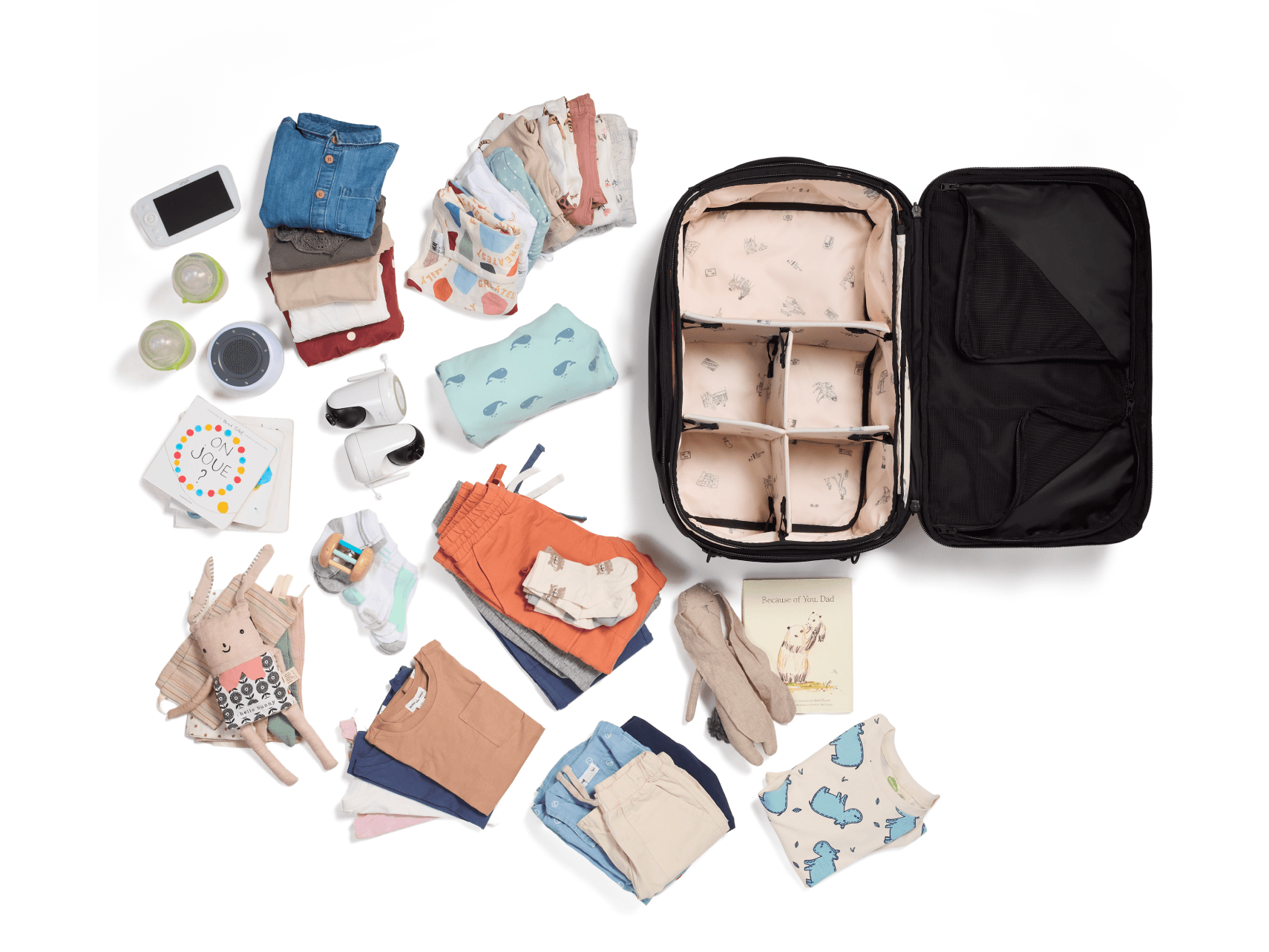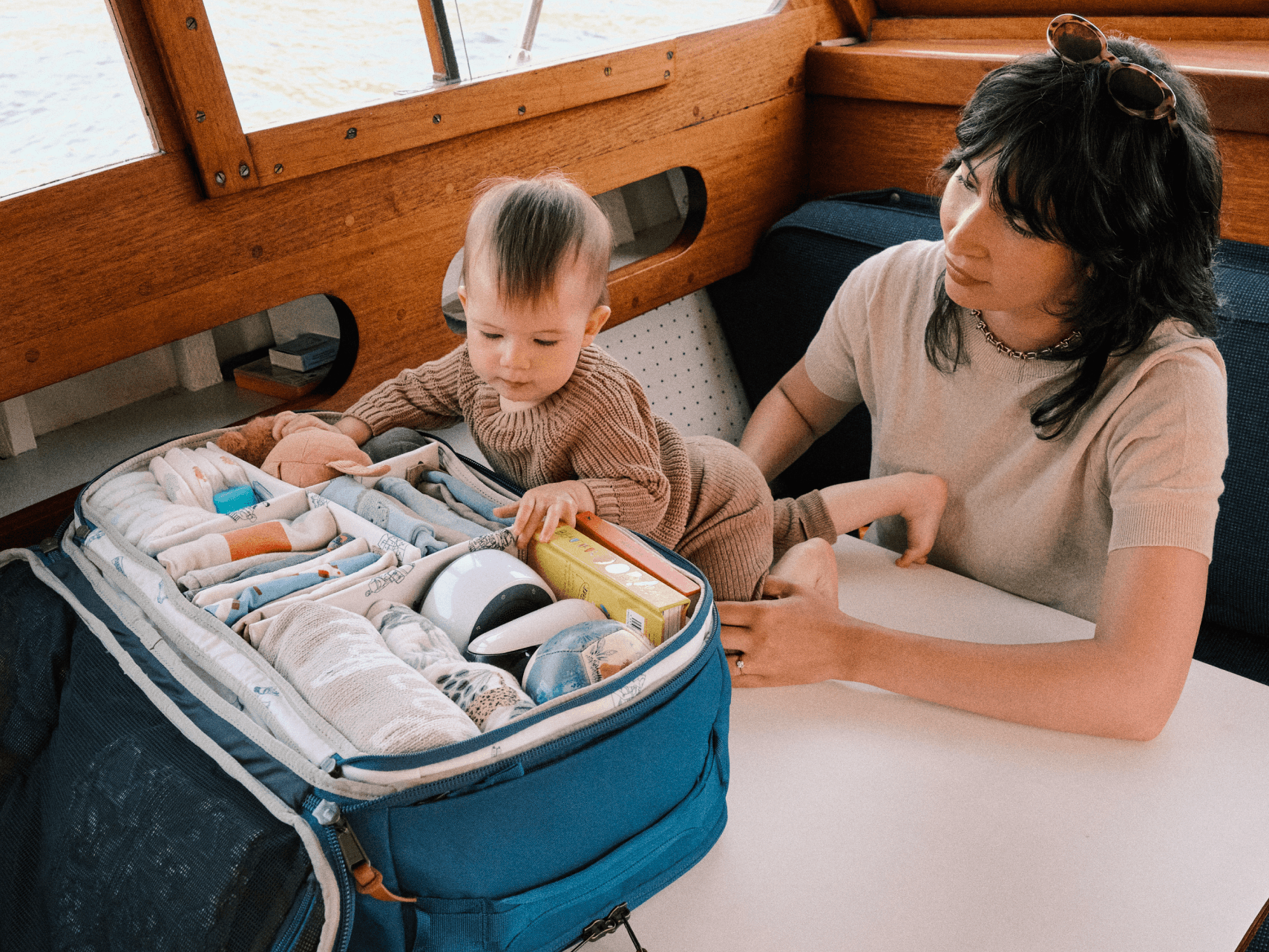

We’ve been spending a month working and living abroad in Europe each summer since our youngest was 1.5 years old. This toddler packing list is how we keep the bags manageable: enough clothes for seven days, a few familiar favorites, and laundry along the way. Between planes, trains, and road trips, we’re always glad to have less to carry.
This is our repeatable system regardless if you're traveling for 3-days, 7-days or one month. Below is our toddler travel packing list for ages two to three, including how we organize everything in the Rollaway. It’s intended for trips outside of winter, when you don’t need bulky coats and cold-weather gear.
We’ve also included suggestions for shorter trips. Start with the list, then adjust for the child you actually have: the one who can wear shorts twice, or the one who needs a change before breakfast is over.
What should you pack when traveling with a toddler?
For seven days, our starting point is:
- 7–8 tops
- 5–7 bottoms
- 2 layers
- 2–3 sets of pajamas
- 7 pairs each of socks and underwear for a toilet-trained toddler
- Then we add toiletries, shoes, sun accessories, bedtime books, and a few activities.
This is the luggage list for your stay. Snacks, drinks, flight-day spare clothes, and other things you’ll want within reach during the journey belong in your toddler flight-day bag.
Before you pack, look across both bags so you know how many clothes and activities you’re bringing altogether.
Table of Contents
- What should you pack when traveling with a toddler?
- Watch us pack our toddler's luggage (Rollaway)
- How much should you pack for different trip lengths?
- The Closet Method: pack by occasion & category
- Our complete seven-day toddler packing list
- How we keep the bag organized during the trip
- How do you travel with a toddler car seat?
- What we’d leave out or reconsider
- What belongs in the flight-day bag?
- Putting the family setup together
- FAQs
Watch us pack our toddler's luggage (Rollaway)
Sometimes it’s easier to see everything go into a bag than read a list and imagine it.
We organize things the way we would in a small closet: tops together, bottoms together, bedtime things together (Details on our Closet Method below). Each group has a place, so you can find clean clothes without unpacking the whole bag. The Cubby (included with every Rollaway and Hideaway Duffel) was specifically designed for this method, but you can also pack any carry-on luggage + packing cubes.
The video below features the Rollaway (also works for the Hideaway Duffel) where you can see the clothes, books, toiletries, and activities being packed together. Watch it first for an overview, or have it open while you pack.
How much should you pack for different trip lengths?
A three-day trip doesn’t need the same wardrobe as a week away. But some things barely change: you’ll probably bring the same toiletries kit, sun hat, and favorite bedtime book either way.
Here’s how we’d adjust the clothing. The shorter-trip columns are suggested starting points; the seven-day column matches the packing setup shown in this guide.
| Clothing | 3 days | 5 days | 7 days |
|---|---|---|---|
| Tops | 4–5 | 5–6 | 7–8 |
| Bottoms | 3–4 | 4–5 | 5–7 |
| Layers | 1–2 | 2 | 2 |
| Pajama sets | 2 | 2–3 | 2–3 |
| Underwear, if toilet-trained | 4–5 | 5–6 | 7 |
| Pairs of socks | 3–4 | 5–6 | 7 |
These quantities assume some bottoms and pajamas can be worn again. They aren’t a promise that every toddler will get through the trip without an extra wash.
Seven pairs of underwear leaves no spare for a seven-day trip. If you’re toilet learning or dealing with regular accidents, add more. The same goes for clothes if your child often needs several changes a day.
For trips longer than a week, we’d start with the seven-day list and plan laundry roughly every seven days. Check when you can actually wash and dry everything. If you’ll be air-drying, wash before the last clean outfit is gone.
The Closet Method: pack by occasion & category
The easiest way to pack minimally and stay organized is to pack according to occasions or categories.
That means you know exactly where to look in your luggage for your little one's "daytime" clothes, "sleep" clothes, and outlier "weather" scenarios. This will help you save time and stress during morning and bedtime transitions when you're already feeling rushed, or your toddler is doing parkour on the hotel bed.
A simple way to think about it:
- Daytime routine: Organize categories by Tops + Bottoms + Diapers/Underwear + Socks/Accessories. Choose items that mix & match easily for quick outfits. Mirror your organization at home.
- Sleep routine: Pajamas + Sleep sacks + Sleep Items (loveys, baby monitor, portable sound machine) live together. Bedtime shouldn’t trigger a suitcase avalanche!
- Weather routine: Two reliable Warm Layers + 1 Waterproof Jacket (not five “maybe” layers).
- Reality routine: 1-2 backup outfits plan for spills/accidents assuming washer/dryer machines are available (small buffer, not a second wardrobe). 3-4 backup outfits assuming no washer/dryer machines are available.
This is also how you get the “portable dresser” effect: even 3-year-olds can grab their outfits and get dressed without you digging through a black hole.
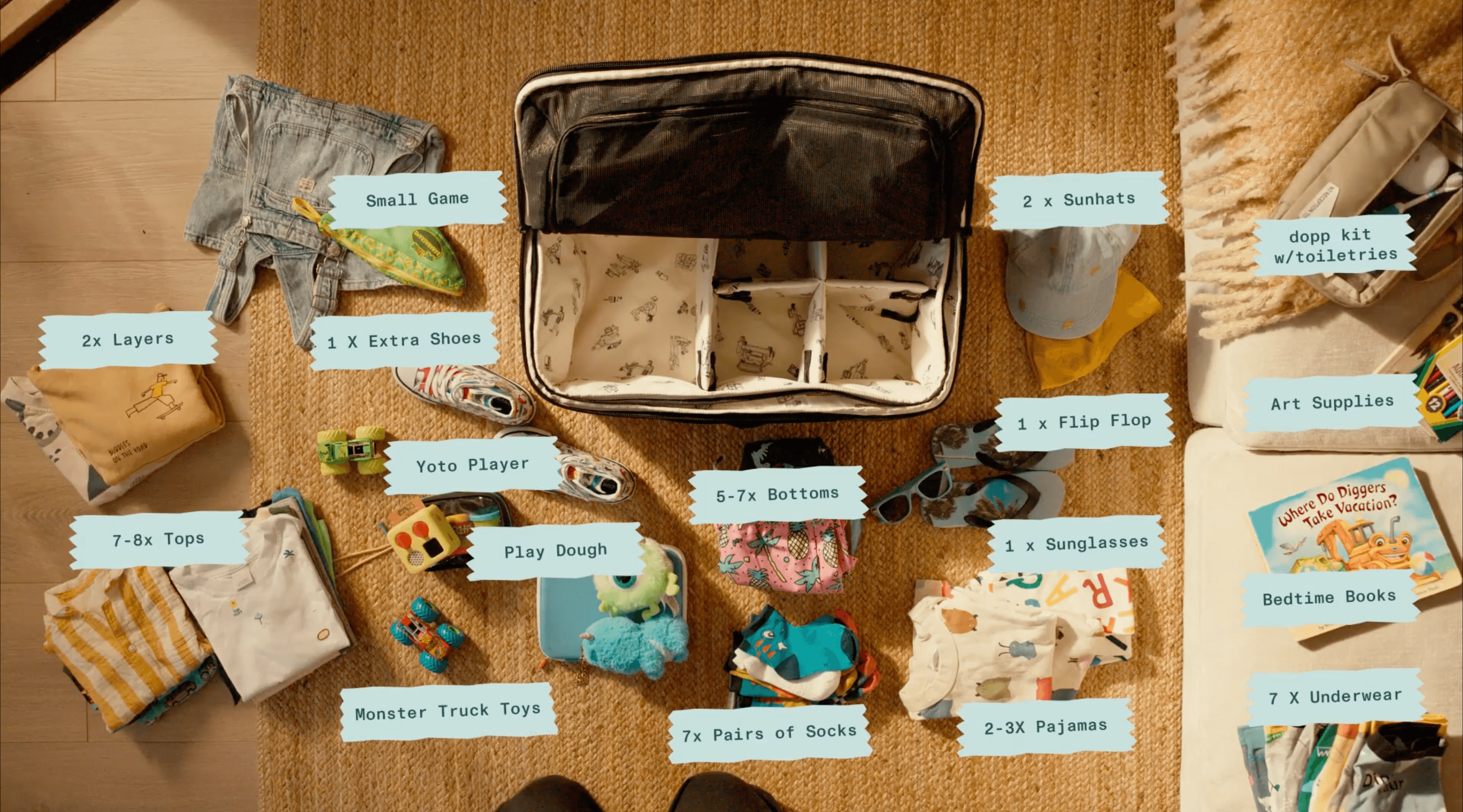
Our complete seven-day toddler packing list
We organize by the things we reach for together: daytime clothes, bedtime things, toiletries, and activities.
That’s the useful part of the “Closet Method”. Give each group a home, much as you would in your child’s drawers. When you arrive, you can find pajamas without pulling out the whole wardrobe.
Here’s the list, along with how we’d keep each group organized in the Rollaway.
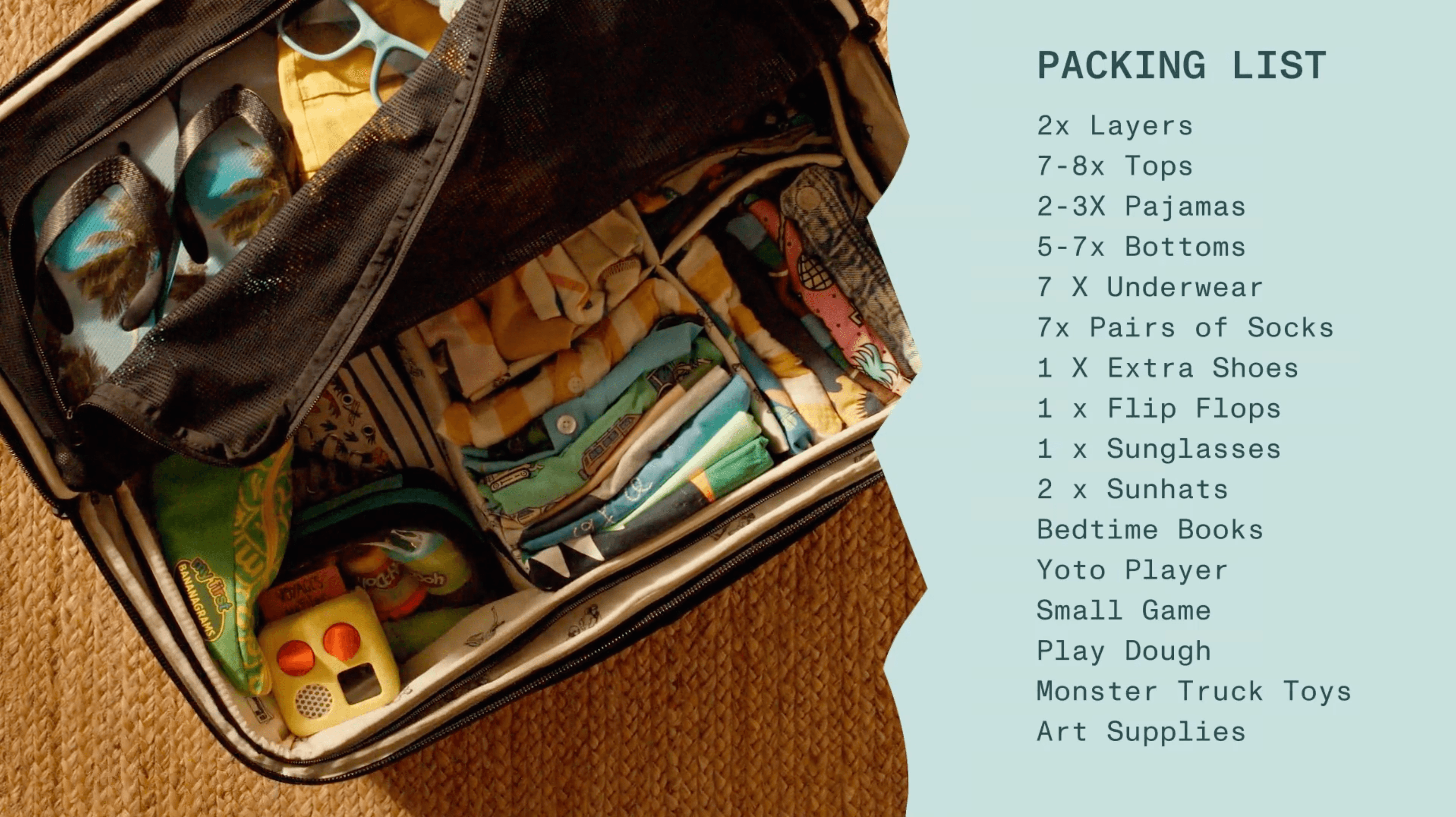
Daytime clothes
- 7–8 tops
- 5–7 bottoms
- 2 layers
Tops tend to need changing more often than bottoms, which is why there are a few more here. Five bottoms can work if some get another wear; seven gives you a fresh pair each day. Going somewhere with a pool or beach? Add swimwear too.
Choose clothes that go together without much thought. A clean T-shirt should work with whichever shorts are still clean.
Packing them: Keep tops and bottoms in separate sections, with the clothes visible rather than buried beneath a stack. Keep the layers together so you know where to look when the temperature drops.
Underwear and socks
- 7 pairs of underwear
- 7 pairs of socks
If your toddler is still in diapers, uses pull-ups overnight, or is toilet learning, this part will look different. Bring what you need until you can reliably get more at your destination, including a little room for delays.
Packing them: A small compartment or pouch keeps the little things together. Otherwise, it’s surprisingly easy to find six shirts and no socks when you’re trying to leave.
Shoes and sun accessories
- 1 extra pair of shoes
- 1 pair of flip-flops
- 2 sun hats
- 1 pair of sunglasses
Shoes are worth a second look because they take up so much space. Think about the pair your toddler will travel in, then what else they’ll actually use.
Our setup includes extra shoes and flip-flops, but you may only need one of those. Sandals can replace flip-flops if they’re easier for your child to walk in.
Packing them: Keep shoes separate from clean clothes, using a washable shoe bag if helpful. Put hats and sunglasses together somewhere easy to find.
Pajamas and bedtime books
- 2–3 sets of pajamas
- 1–2 bedtime books
Two or three sets of pajamas works if your toddler can wear them more than once. If overnight accidents are common, bring more or plan an earlier wash.
This is also where we’d make room for a favorite comfort item. Something familiar can be worth the space when bedtime is happening somewhere new.
Sleep sacks, a monitor, or a sound machine are additions if your child uses them; they aren’t included in this photographed inventory.
Packing them: Keep the bedtime things together, with pajamas in one section and books nearby. You shouldn’t have to search the whole bag when everyone’s tired.
Toiletries
- 1 dopp kit with your toddler’s toiletries
- Toothbrushes
- Toothpaste
- Nail clippers
- Tweezers
- Bath mitt
Start with their usual toothbrush, toothpaste, and washing or care products. Bring smaller amounts of what already works rather than buying a whole new collection of travel products. And be prepared to purchase items like shampoo, bath wash, etc. at the destination.
Some things can be shared with the family. Others are easier to keep just for your toddler.
Packing them: Keep everything together in the dopp kit. Anything needed during the journey should stay accessible in your flight-day bag. Check the liquid-screening rules for your route before packing.
Toys and Activities
- 1 small game
- 1 Yoto player + cards
- Playdough
- Toys
- Art supplies
Your version will probably look different. Maybe the monster trucks would get played with for hours, or maybe your child would much rather have crayons.
The useful thing is having a few different options without bringing the whole toy shelf. If the Yoto is coming, remember its content and charging cable too.
Packing them: Pouches help keep small pieces together. Put anything you want during the flight in your flight-day bag; it still counts as part of what you’re bringing.
How we keep the bag organized during the trip
Packing neatly at home is one thing. Finding a clean outfit on the fourth morning is the part that matters.
Try keeping each category in the same place throughout the trip. As clothes get worn, put them in a separate laundry bag rather than back among the clean things.
If you already like packing cubes, use them. The principle works with cubes, pouches, or built-in compartments: you want to see what’s available and put things back without reorganizing the entire bag.
That’s what we’re aiming for with the Rollaway setup in the video—a bag we can keep using throughout the stay.
How do you travel with a toddler car seat?
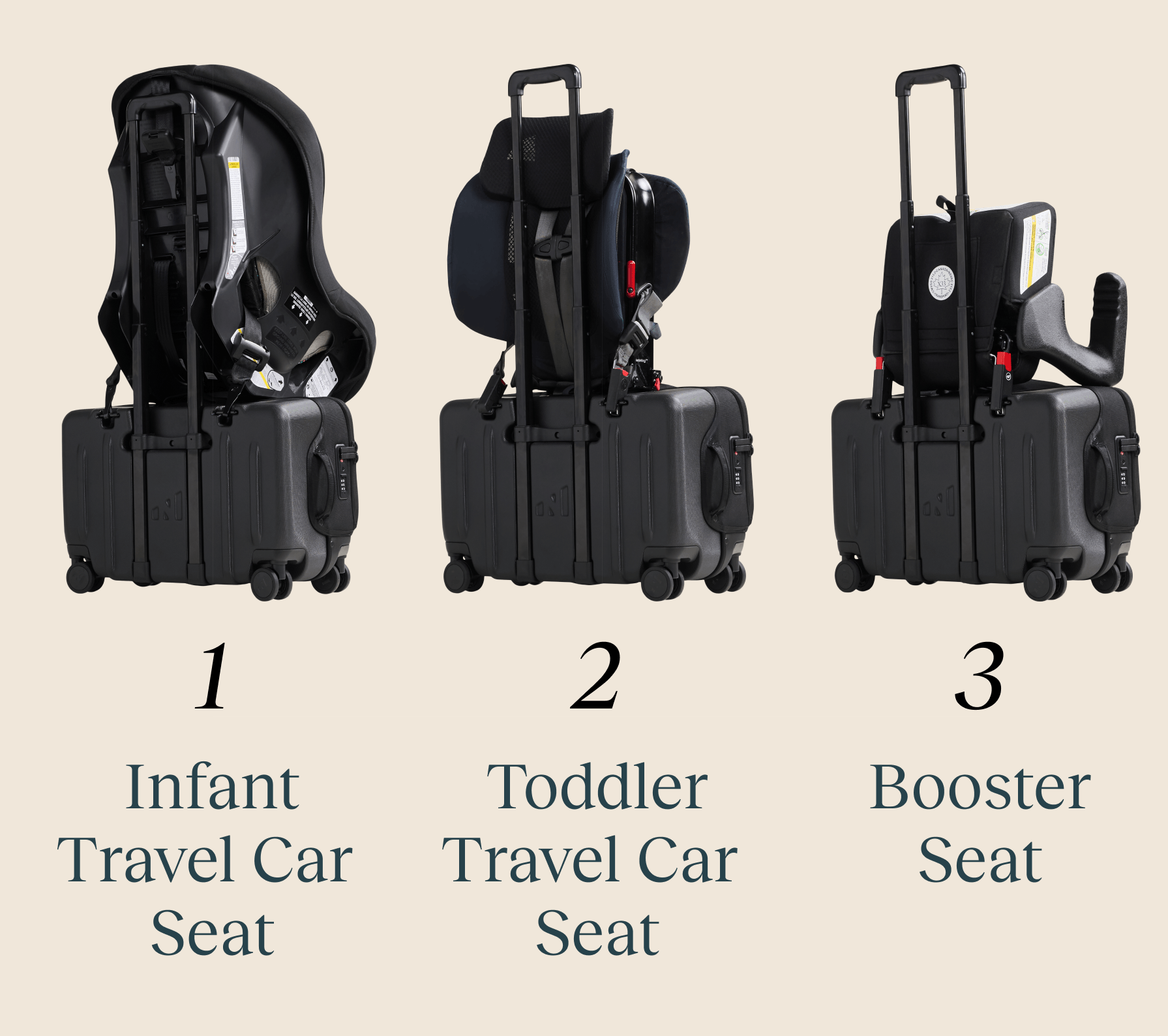
Traveling with a toddler car seat can be logistically challenging. We recommend using a lightweight or travel-friendly car seat, transport it through the airport on your luggage (like the Rollaway), and install it directly on the airplane seat if your toddler has their own airplane seat and the car seat is approved for aircraft use and permitted by the airline.
The Rollaway was specifically designed to make it easier to transport your toddler car seat through the airport. With our patent-pending NRC SeatLatchTM anchor points, you can directly attach the car seat onto the carry-on roller.
What we’d leave out or reconsider
When the bag starts getting full, these are the things we’d look at again:
- Extra shoes without a specific purpose. Will they actually get worn?
- Outfits that only work one way. Clothes that mix together give you more options.
- Too many toys. A few familiar favorites can be enough.
- Duplicates across bags. Check what’s already in the flight-day bag before adding more.
- Full-size shared toiletries. Bring smaller amounts where practical.
Be more cautious about leaving behind things your child depends on. Only plan to buy supplies after arrival if you know you can get the right ones when you need them.
What belongs in the flight-day bag?
The clothes and activities packed for your stay won’t help much if they’re out of reach when you need them.
Keep snacks, drinks, spare clothes, changing supplies, and travel activities accessible during the journey. Our toddler packing list for flights walks through that bag separately.
Putting the family setup together
Once your toddler’s things are sorted, there’s still everyone else to pack for.
Our family carry-on guide is the place to start when you’re deciding how the bags fit together for your family.
Before you call the packing done, close everything up and try carrying it together. Can you comfortably manage the bags while helping your child? That’s just as useful to know as whether everything fits.
FAQs
What if I’m traveling with a baby and a toddler?
Keep the toddler list as your starting point, then make a separate list for your baby’s feeding, changing, clothing, and sleep needs. Some things can be shared, but bottles and diapers need their own space.
Our family carry-on guide helps you think through the bags together. For supplies you’ll want within reach during the journey, start with our baby flight-day packing list.
Can we use this list with a different bag?
Absolutely. The list doesn’t depend on owning a Rollaway or the Hideaway Duffel. You can keep the same groups together using compartments or pouches in another bag. The video shows how we pack ours.
Can I really do carry-on-only with a toddler for 3–7 days?
Yes—if you pack outfit sets, commit to the +2 buffer (not a full duplicate wardrobe), and skip what you can buy at your destination (think: diapers, formula, snacks).
Does carry-on-only mean we never gate-check a stroller or car seat?
For us, it means we don’t check luggage at the check-in counter. We may still gate-check allowable strollers or car seats.
Check the allowances for your booking, including equipment rules, bag dimensions, weight limits, and fees. Carry-on luggage isn’t automatically free on every fare.
What should I pack if we’re crossing time zones?
Start with the bedtime things your toddler already knows: their usual pajamas, a favorite book, and any comfort item they use. If a sound machine is part of your routine, remember its charger or power supply too.
Those familiar things are worth considering, but you don’t need to fill the bag with extra sleep gadgets. For the schedule side of the trip, we’ve put our advice in our baby and toddler jet-lag guide.